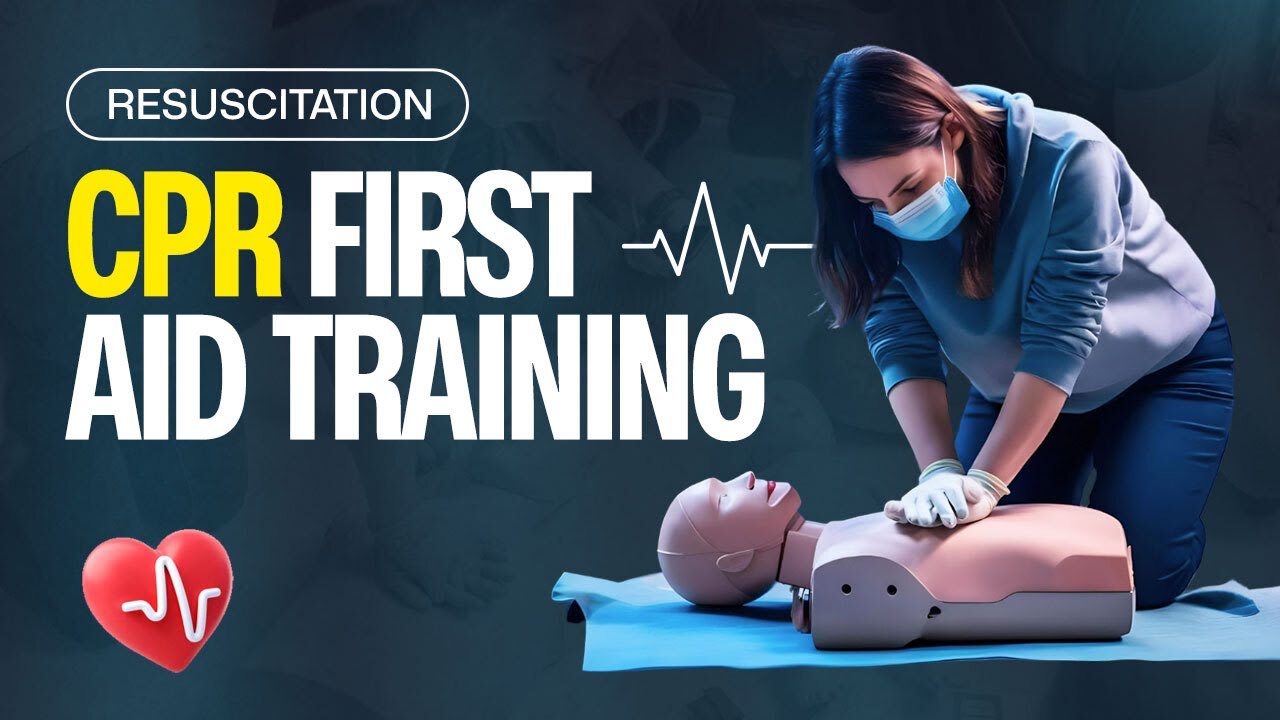
Cardiac apprehension does not wait for a practical moment. It can take place at Lake Wendouree during a morning run, on a building website in Delacombe, or in the house on a peaceful Sunday. When it occurs, the outcome rests on three points you manage: the rate of your compressions, the depth you achieve, and how much time you maintain preceding aid takes over. The scientific research is clear, and so is the method, however under stress the details can slide. This guide distills what issues for CPR in Ballarat, grounded in existing guidelines and the truths you encounter on the street, in the workshop, or on the farm.
If you have already taken an emergency treatment course in Ballarat, great. If you have not, take into consideration reserving a session. A couple of concentrated hours on a manikin build muscle memory you can not obtain from analysis, and regional instructors make a distinction when they form drills around local job and sports dangers. Whether you found out with First Aid Pro Ballarat, through a CPR course Ballarat residents advise, or another company, refreshers keep your skills sharp and your confidence steady.
The essential triad: rate, depth, duration
People bear in mind the wide strokes: press hard and fast, do not quit. Yet survival depends upon specifics.
How fast: Aim for 100 to 120 compressions per min. That cadence creates enough ahead blood circulation without tiring you also quickly. Faster is not far better yet array. People that quicken to 140 per minute often tend to do sloppy compressions and do not permit full chest recoil, which reduces coronary blood flow.
How deep: Press at the very least one third of the upper body depth, about 5 to 6 centimetres in an ordinary grownup. Deepness is not a guess in training. On a manikin with comments, you can feel what 5 cm absolutely implies. On an actual individual it differs with type of body. Slender or older adults usually require much less pressure to reach the same deepness. Obese or muscular upper bodies need stronger pressure. What issues is that each compression gets to that 5 to 6 cm target and you allow the chest to bounce back fully prior to the next push.
How long: Continue until the person reveals clear indications of life, a defibrillator recommends say goodbye to shocks and a medical care professional calls a quit, or trained assistance takes control of. In real terms that frequently means 10 to half an hour of cycles in a public setup. If a computerized external defibrillator is applied within the very first couple of mins and shows a shockable rhythm, your efforts may be much shorter, but you must be prepared to maintain going. In backwoods outside Ballarat, awaiting a rescue can extend beyond 15 minutes. Turning of rescuers matters in those cases.
These numbers come from solid evidence. Rates below 100 or above 120 compressions per min are connected with even worse results. Midst much less than 5 centimeters do not create adequate perfusion in adults. Depths past 6 centimeters increase the danger of rib cracks without significant survival benefit. There are exceptions in side instances, like small-statured adults or when compressions on a really soft surface sink energy right into a bed mattress, yet the target ranges are still your anchor.
Getting the setup right when seconds matter
Before you touch the upper body, established for success. The very first 30 seconds you spend on positioning and a clear strategy can repay in mins of efficient resuscitation.
Lay the individual level on a company surface. If they get on a sofa or a soft bed, relocate them to the flooring. On a carpet floor, you get appropriate recoil. On a mattress, even a medical facility bed, compressions lose deepness and recoil, so move a hard board beneath if one is available.
Kneel next to the upper body with your shoulders straight above your hands. Stack your hands on the lower fifty percent of the breastbone, out the ribs. Lock your arm joints. Placement your knees close enough that you can lean your body weight directly down over the sternum, not press with your arms. Using your body weight maintains the deepness consistent and hold-ups fatigue.
Strip or open apparel if you require to place AED pads. If there is a lot of breast hair where the pads need to go, utilize the razor in the AED kit to promptly shave those places. Damp skin from sweat or water around Windermere or the pool ought to be towel-dried for pad adhesion. If a nitroglycerin patch or various other transdermal medicine patch exists under a pad placement website, remove it with a gloved hand to stay clear of electrical arcing and guarantee excellent contact.
For Ballarat offices where high-vis and jackets are common, prepare for fast accessibility. A small injury shears in the work environment emergency treatment kit can save valuable secs. Educating that mimics clothing elimination settles when you require it.
The compression technique you can trust under pressure
Once your hands are in location, press the upper body at that 100 to 120 per min rhythm. Press directly down 5 to 6 cm, then launch fully to enable the upper body to recoil. Full recoil matters greater than many people understand. Envision squeezing a sponge after that allowing it loaded with water. If you do not allow it bounce back, the next press has less to move on. Leaning on the chest between compressions blunts this refill. Keep your hands in contact however raise your stress throughout the recoil phase.
Count out loud or in your head. Lots of people use tunes to hold the 100 to 120 pace. Choose something you can hum immediately, and method during a CPR refresher course Ballarat trainers provide. The objective is uniformity. People frequently start solid, dip in depth after a minute, after that accelerate to compensate. Feedback gadgets in modern-day manikins are good at training against that drift.
If you have a partner, swap every 2 mins, which lines up with AED rhythm checks. 2 mins has to do with 5 collections of 30 compressions with breaths or roughly 200 to 240 constant compressions in hands-only mouth-to-mouth resuscitation. Also healthy individuals lose depth after 2 mins. Establish a timer on a phone if a spectator can handle it, or revolve at the AED motivates if available. Smooth shifts keep blood flow steady. Aim for less than five seconds of interruption during a changeover.
Hands-only or rescue breaths
For adults with a sudden collapse, hands-only CPR functions well in the first few mins. The majority of adults in heart attack have a cardiac beginning. Their blood is still oxygenated at an early stage, so compressions that distribute that oxygen are the top priority. Onlookers are most likely to start and keep going with hands-only mouth-to-mouth resuscitation, and that saves lives.
There are situations where breaths matter a lot more:
- Drowning or near-drowning, consisting of lake or pool events. These victims commonly suffer hypoxia initially. Rescue breaths might improve end results if you are educated and willing. Paediatric cases. Kid's arrests are regularly respiratory system in beginning. For babies and youngsters, compressions with breaths are suggested if you have training. The compression depth shifts to concerning one third of the breast, roughly 4 cm in infants and 5 cm in toddlers, with various hand techniques. Drug overdose and asphyxiation. When oxygen has actually been reduced for a while prior to collapse, mixing in breaths can assist if you are trained and have a barrier device.
If you give breaths, use a 30 compressions to 2 breaths proportion for a single rescuer on adults. Turn the head back, raise the chin, pinch the nose, and offer each breath over one second, simply till the chest rises. Prevent big, rapid breaths, which inflate the belly and rise regurgitation danger. If you have 2 rescuers and you have a bag-valve mask, one person seals the mask with both hands while the other presses the bag, collaborating with compressions. That needs practice. Lots of Ballarat first aid courses hang out on mask technique since an excellent seal makes the difference.
For many neighborhood participants in Ballarat, a first aid and CPR course Ballarat providers supply will certainly lead with hands-only mouth-to-mouth resuscitation to get people comfy acting. Including breaths is an important step for those all set to go deeper and for offices where an oxygen kit or bag-valve mask is available.
The AED is your teammate, not a distraction
ballarat first aid coursesAn AED transforms the equation. Early defibrillation is the solitary toughest web link in the chain of survival for shockable rhythms. In Ballarat, AEDs are increasingly offered in shopping centres, sporting activities clubs, institutions, and larger offices. Some show up in wall surface closets near main entrances with clear signs. During a first aid course in Ballarat, ask your trainer to mention typical locations or reveal you the neighborhood AED pc registry. If your office or club does not have one, push for it. The price is small contrasted to the threat profile of several regional sites.
When an AED arrives:
- Turn it on right away and adhere to the voice motivates. The devices are created for lay rescuers and will guide pad positioning and analysis. Do not stop briefly CPR to unpack the device. Someone continues compressions while an additional opens up the case, tears open pads, and reveals the chest. Apply pads to bare, completely dry skin. Location one pad high on the best upper body, just listed below the collarbone, and the various other on the left side of the upper body, a hand-span below the armpit. If the upper body is perspiring or wet, towel off before pad positioning. If a pacemaker lump sits under the pad area, place the pad at the very least a couple of centimetres away. Stop compressions just when the AED tells you to stand clear for rhythm analysis or shock distribution. As soon as the shock is supplied, return to compressions without looking for a pulse. The gadget will certainly reanalyse in 2 minutes.
Do not worry about hurting the person with a shock they do not require. The AED will just deliver a shock if the rhythm is shockable. Your job is to make certain pads get on and compressions proceed with minimal pauses.
Special considerations in Ballarat settings
A city like Ballarat has varied risk profiles: heritage homes with steep staircases, commercial workshops, sporting ovals, and farms on the borders. Each establishing forms exactly how you prepare and just how you respond.
Workshops and construction: High-noise environments make communication hard. In training, technique clear, brief commands. Designate functions early: compressor, AED operator, customer to Three-way Zero, and someone to satisfy paramedics at eviction. Ear defense and handwear covers can reduce you down, so stage your first aid and mouth-to-mouth resuscitation packages where they are simple to order. In Ballarat emergency treatment training, numerous instructors mimic noise and crowding so you discover to operate under pressure.
Sports areas: Sudden cardiac arrest during sporting activity is unusual however real. Coaches and fitness instructors must know where the ground's AED sits and guarantee it is accessible throughout training and games. For juniors, bear in mind the paediatric pad setting if the AED has one. If it does not, use adult pads however put them anterior-posterior if the youngster's chest is small. Clubs that invest in a CPR training Ballarat session often pair it with a defib drill and time themselves from collapse to very first shock. Aim for first aid pro ballarat under 3 minutes.
Rural buildings: Distance is the difficulty. Action times outside the CBD can stretch. Family members and workers should understand each other's medical conditions, consisting of any dental implanted defibrillator, and maintain AEDs and emergency treatment sets in recognized areas. Some Ballarat first aid courses cover prolonged resuscitation and handling tiredness when you are the only rescuer. Techniques like changing knee positions to save your lower back and utilizing a metronome application to keep rate are simple but valuable.
Cold settings: Winters in Ballarat get quick, and hypothermia adjustments the photo. If the person is chilly and damp, protect as finest you can while maintaining accessibility to the breast. Hypothermia can shield the mind somewhat, so long term mouth-to-mouth resuscitation can be rewarding. The AED will certainly still suggest shocks when appropriate. If the individual is severely hypothermic, defibrillation may be less reliable up until they warm, however you still follow the prompts.
Crowded public rooms: Onlookers often want to aid yet do not recognize what to do. Offer specific tasks. You call Three-way No and remain on the line. You obtain the AED from the wall surface. You clear room and keep individuals back. You time the cycles and call the button at 2 mins. When people work, they add instead of distract.
Quality over heroics: staying clear of the typical mistakes
Under tension, excellent objectives can get on routines that lower CPR top quality. Experts of first aid and CPR courses Ballarat vast will certainly identify these pitfalls.
Shallow compressions: Tiredness is the main offender. You start at 5 to 6 centimeters and drift to 3 to 4 centimeters after a minute or 2. Rotate rescuers early. If you are alone, reset your posture. Knees closer, shoulders over hands, use your body weight.
Incomplete recoil: Leaning on the chest in between compressions really feels steady, particularly on an unsafe or moving surface area. It chokes off coronary blood circulation. Knowingly lift your pressure on the upstroke. In training, view a responses gadget to really feel the difference.
Excessive disturbances: Every time out drops perfusion and takes several compressions to restore. Do not stop to examine pulses or to consider the person's face after each cycle. Depend on the AED's rhythm checks. Prepare the air passage and breaths while compressions proceed, then slip in 2 breaths and resume.
Overventilation: Too much air, also fast, raises intrathoracic stress and decreases venous go back to the heart. Give each breath over one second, simply enough to see the breast increase, after that stop. If unsure and you are not comfy with breaths, stick to hands-only CPR.
Slow hands throughout AED triggers: New rescuers often freeze once the system shows up. Keep compressions going till the AED instructs you to stand clear. After a shock, do not wait to see if they awaken. Begin compressions once more. The two-minute blocks are your rhythm.
Safety and authorization realities
If a person is unresponsive, not taking a breath usually, and has no obvious signs of life, you have actually implied consent to start mouth-to-mouth resuscitation. In work environments and neighborhood settings in Victoria, the Do-gooder securities cover people who provide assistance in an emergency situation in excellent confidence and without recklessness. That consists of utilizing an AED. You are not anticipated to be excellent, just reasonable.
Safety first. Scan the atmosphere swiftly. Online electrical dangers, fire, lorry web traffic, and unpredictable structures can transform you right into a second casualty. Move the person only if needed to make the scene safe. If the collapse takes place on hard-packed dirt or gravel, placed a jacket under the head to decrease injury during compressions, however do not make the surface area soft under the chest.
Be conscious of social and individual boundaries, yet do not allow reluctance prevent action in a life threat. If a relative is present, a calm sentence assists: I am trained in mouth-to-mouth resuscitation. I am mosting likely to assist currently. Please call Triple Absolutely no and bring the AED if there is one. That quality steadies the scene.
How genuine training sharpens the edge
Nothing replacement for pressing a manikin and feeling what 5 to 6 centimeters really is. A good Ballarat emergency treatment course will challenge your presumptions. It will reveal you just how rapidly 2 minutes passes when you get on your knees, and just how untidy apparel and sweat can make simple actions feel made complex. It will also provide you the self-confidence to lead when others freeze.
There is a difference in between checking a box and structure competence. Seek training courses that include:

- High-quality manikins with responses on deepness and recoil, not just basic torsos. Multiple situations that mirror Ballarat life, from a collapse on Sturt Street to a near-drowning at a dam. AED experiment various versions, including pad placement on male and women chests and paediatric options. Honest coaching on fatigue management and turning under real timing constraints.
Many carriers provide a first aid certificate Ballarat locals can complete in a single day for HLTAID011 Give Emergency Treatment, with the CPR part HLTAID009 commonly readily available as a shorter update. If you are brief on schedule or require the CPR certification for your function, a concentrated CPR course Ballarat sessions run in the night or on weekends are practical. For those who have actually not practiced in a while, a CPR correspondence course Ballarat instructors provide every year is not just a regulatory tick. It is a tune-up that can bring back depth, cadence, and confidence.
If your organisation coordinates emergency treatment training in Ballarat, request scenario-based sessions and request modules that match your context. Hospitality locations gain from choking and AED drills in limited rooms. Industrial websites should practice with gloves, boots, and history sound. Colleges require paediatric emphasis. Tailoring turns basic skills right into relevant skills.
When the person is not taking a breath normally
Agonal gasps are deceitful. They are irregular, laboured, and occasionally loud enough to fool bystanders into assuming the individual is breathing. They are ineffective breaths. If a person collapses and then takes a couple of gurgling, taking breaths at lengthy periods, treat that as no breathing. Start compressions. In every first aid and CPR course Ballarat facilitators enhance this, due to the fact that hesitation below sets you back minutes.
Seizure-like motions can likewise take place during cardiac arrest. If they fall down, stiffen, or jerk, after that go limp and unresponsive without regular breathing, consider heart attack and start mouth-to-mouth resuscitation. Do not invest priceless time determining whether it was a seizure initially. Airway control and compressions take priority.
Aftercare: what happens after a resuscitation attempt
If the individual gains back indications of life prior to paramedics arrive, place them on their side in the healing placement while keeping an eye on breathing. Keep the AED affixed. Instruments will certainly continue to monitor and trigger if a shockable rhythm returns. People frequently vomit as they get up. Turn the head down to safeguard the airway.
Be all set for intense feeling. Relative may sob or yell. Rescuers in some cases tremble or really feel pale. Delegate care: a person convenience the family members, a person fetches water and coverings, someone flags down the ambulance. Write down key times if you can: collapse, mouth-to-mouth resuscitation beginning, initial shock, indicators of life. Paramedics worth those details.
You may really feel aching for days after delivering top quality compressions. Tender wrists and a rigid back prevail. That pain is the cost of pressing to 5 to 6 cm for minutes at a time. It means you did the job that gives somebody a real chance.
If the outcome is not what you hoped, remember that also excellent CPR is not a guarantee. The objective is to buy time, not to magically reboot a heart. Talk with your group or family later. Several emergency treatment training companies in Ballarat can debrief informally if you connect, and larger offices may have access to staff member aid programs.
Quick reality checks that aid you act faster
The rhythm in your head: 100 to 120 per min is brisk. If you can not hold that rate for 2 mins without losing kind, change your body setting or switch faster. During training, examination tracks or a metronome application and choose one that you can remember under stress.
Depth on a soft surface: If you can stagnate the person off a soft bed or couch, slide something rigid under the breast location: a reducing board, a firm tray, also a folded door if available. In the field, we have actually used swimming pool kickboards by the water. Anything that withstands compression helps.
Breaths or no breaths: If you have a barrier gadget and the circumstance suggests a respiratory system reason, include breaths. If you are uncertain, hands-only is much better than pausing to ponder. Beginning compressions currently, and add breaths later if educated aid arrives.
AED placement on a big chest: On really wide or barrel chests, guarantee pad edges do not fold. If required, area pads anterior-posterior, one on the facility of the breast and one on the back below the left shoulder blade.
Jewellery and chest piercings: Do not lose time eliminating them, however stay clear of placing pads straight over steel. A small shift around a nipple area ring or chain necklace resolves the problem.
Building a more powerful local chain of survival
Ballarat has an area fabric that turns up when needed. The more individuals who know what 100 to 120 per minute feels like, and what 5 to 6 centimeters really is, the stronger that fabric becomes. If you run a club, a coffee shop, or a workshop, consider scheduling a session with a neighborhood carrier offering first aid training Ballarat broad. If your certification schedules for renewal, publication a CPR refresher course. If your family hangs out around water, include drowning-specific practice to your plan.
A few useful actions link it with each other:
- Map AEDs in your regular areas: home block, office, health club, sporting activities ground, much-loved café. Set calendar suggestions for yearly mouth-to-mouth resuscitation refreshers and three-year full emergency treatment renewals. Encourage your group to complete a first aid and CPR course Ballarat trainers provide, after that run short internal drills every quarter. Check your emergency treatment sets and AED monthly. Replace pads and batteries prior to they run out. Keep razors, scissors, and towels in the AED case.
The numbers are straightforward: 100 to 120 per min, 5 to 6 centimeters deepness, two-minute cycles with very little disturbances. The judgment comes with practice. Ballarat first aid courses make that method actual. When the minute shows up, your hands will certainly know what to do, which understanding can turn a collapse into a survival story.